 Lauterbrunnen City Guide
Lauterbrunnen vs Interlaken as Your Base for the Jungfrau Region
Lauterbrunnen vs Interlaken is the base decision behind almost every Jungfrau Region trip, and you only get one hotel booking to make. The two names keep coming up because they suit very different trips. This guide compares them as bases: how long the trains take, how close you sleep to the lifts, what each town does after dark, and what it costs to reach the big summits. Our Lauterbrunnen Switzerland guide covers the valley in depth if you decide in its favour. If you would rather start from room options, our Lauterbrunnen hotels and lodging guide lists where beds actually are.
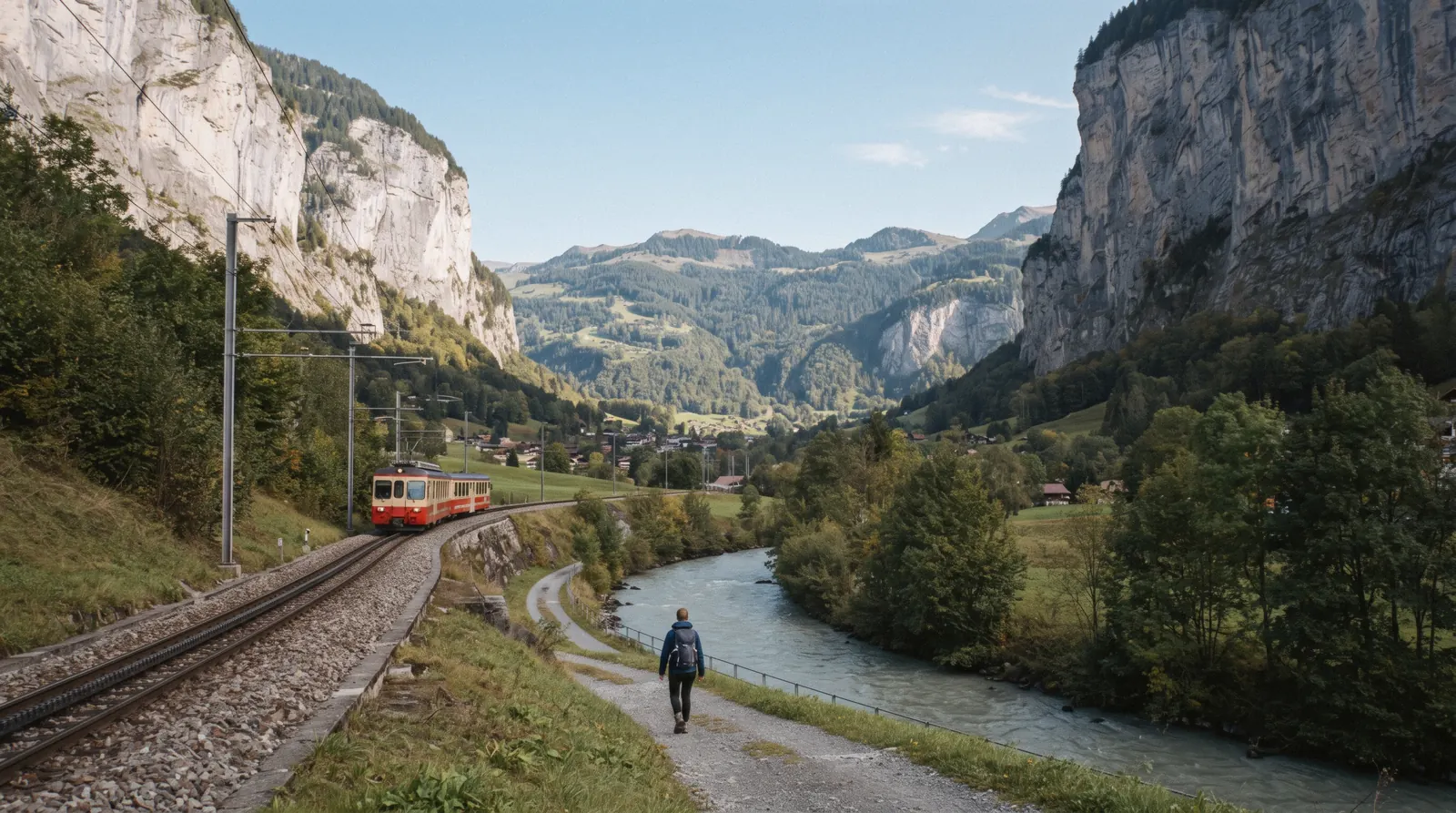
Quick answer Lauterbrunnen or Interlaken as a base?
Base yourself in Lauterbrunnen if the point of the trip is mountains, waterfalls and car-free villages and you accept a small village with limited evening options. Base yourself in Interlaken if you want town amenities, lake walks and more restaurant choice, and you accept a 22-minute train ride before every mountain day. The two are linked by a direct Bernese Oberland Bahn train with no change in 22 minutes, so neither choice strands you. Lauterbrunnen sits at about 802 m inside the valley of the 72 waterfalls. Interlaken sits at 568 m on the flat between Lake Thun and Lake Brienz. Trains, cable cars and ticket prices are identical from whichever one you wake up in, differing only by the connecting leg.
Key takeaways
- The direct Lauterbrunnen to Interlaken Ost train takes 22 minutes with no change.
- Compare lodging options in our hotels and where-to-stay guide.
- Browse how we cover the valley in the Lauterbrunnen City Guide.
- Day plans that work from either town are in our day trips from Lauterbrunnen section.
Two Very Different Settings
Lauterbrunnen is a valley village. It sits at about 802 m on the floor of one of the deepest glacial valleys in the Alps, with cliffs rising on both sides and the valley's own standard count of 72 waterfalls. Staubbach Falls drops 297 m almost straight past the village.
You step out of your hotel and you are already inside the landscape. The municipality had 2,301 residents in the 2020 census and spreads across six villages: Lauterbrunnen and Stechelberg on the valley floor, Wengen at 1,274 m and Mürren at 1,638 m on the ledges, Gimmelwald at 1,364 m and Isenfluh at 1,081 m on the slopes. Wengen and Mürren are car-free.
Interlaken is a lake town. The town proper sits at 568 m on the Bödeli, the flat strip between Lake Thun and Lake Brienz, on the Aare river. Its name means between the lakes, from the Latin inter lacus.
The town had 5,719 residents in the 2020 census on an area of just 4.27 km2, one of the smallest and most densely populated municipalities in the canton, and the wider agglomeration holds about 23,300 people. An Augustinian convent stood on the site from around 1133, and the settlement was called Aarmühle until 1891. From the Höhematte, the central open meadow, you can see the Jungfrau at 4,158 m, the Mönch at 4,107 m and the Eiger at 3,967 m on a clear day.
Those summits are for mountaineers only. Interlaken functions as a base for the region, not as a summit destination itself.
The consequence is simple. In Lauterbrunnen the scenery is the everyday background. In Interlaken the scenery is a view you walk to, at the Höhematte or along the lakes.
Neither is wrong. But if you want to fall asleep to a waterfall, only one of these towns can do that. Our Lauterbrunnen waterfalls guide shows what is on the doorstep.
Size, Beds and Logistics
Interlaken is the bigger machine. With the agglomeration at about 23,300 people it has the critical mass for a wider choice of shops, restaurants and services, and it handles coach and tour traffic at scale. Interlaken Ost station, the gateway to the Jungfrau Region, has 200 parking spaces and 101 large plus 36 small lockers.
If you arrive by car or need to store luggage between check-out and a late train, that infrastructure matters.
Lauterbrunnen is small. The village holds a fraction of Interlaken's population, and its station is also the main transfer point for the car-free resorts, with the Parkhaus Lauterbrunnen car park at the station serving Wengen and Mürren visitors with 974 spaces. The village has a tourist office on the main street about 50 m from the station, open Wednesday to Sunday.
What it does not have is a town around you. Evenings are quiet and dining options are limited to what a village of this size supports.
On beds: we do not publish hotel counts or room prices for either town without a verified source, so treat any specific bed number you read elsewhere with caution. What is confirmed is that accommodation exists at every level in the valley, from Camping Jungfrau Alpine Lodge to the 92-bed Valley Hostel across three chalets and the Mountain Hostel in Gimmelwald. Our where to stay guide works through the options by budget.
A regional visitor tax of about CHF 3.50 per adult per night applies in Lauterbrunnen municipality and unlocks the Guest Card.
Distance to the Summits and Lifts
This is where the choice gets concrete. From Lauterbrunnen you are already at the base of two major uplift systems. The Wengernalpbahn rack railway climbs from the village to Wengen and on to Kleine Scheidegg, the staging point for the Jungfrau Railway to the Jungfraujoch at 3,454 m, the highest railway station in Europe.
On the other side of the valley, the cableway route to Mürren and the Schilthorn starts from the valley floor, with the Schilthorn summit at 2,970 m reached from Stechelberg.
From Interlaken you first ride the Bernese Oberland Bahn to Lauterbrunnen, 22 minutes, or continue toward Grindelwald and use the Eiger Express gondola, which covers Grindelwald Terminal to Eigergletscher in 15 minutes and puts the Jungfraujoch about 45 minutes from the valley terminal. So Interlaken adds a connecting leg to every mountain day. The Schilthorn is the clearest case: the cableway leaves from Stechelberg, reached via Lauterbrunnen, not directly from Interlaken.
A standard adult return from Stechelberg costs US$139.70 (CHF 115).
There is one Interlaken-specific lift: the Harderbahn funicular from Interlaken Ost reaches Harder Kulm, the town's local mountain, in 10 minutes. That is an evening panorama option Lauterbrunnen cannot match. But for the two headline summits, Lauterbrunnen simply starts closer.
If every minute of a short trip counts, sleeping in the valley buys you back roughly half an hour per summit day, and our getting around Lauterbrunnen guide details the local connections. Ticket planning for the top station is in our Jungfraujoch tickets and Schilthorn tickets pages.
What Interlaken Itself Offers
Interlaken's own attractions are modest but real. The Höhematte gives you the big-mountain view without leaving town. Two lakes sit at either end of the Aare, with passenger boats on Lake Brienz running since 1839, now operated by BLS, and villages like Iseltwald on the south shore, a 12-minute direct PostAuto bus from Interlaken Ost.
Harder Kulm is 10 minutes away by funicular. If your travel party includes people who want a flat lakeside promenade day between summit days, Interlaken delivers it and Lauterbrunnen does not.
Lauterbrunnen's own attractions are the valley itself. Staubbach Falls is free to view from the village. Trümmelbach Falls, ten glacier waterfalls inside the mountain carrying up to 20,000 litres per second at peak melt, charges adults US$21.90 (CHF 18) and children 6 to 15 US$9.72 (CHF 8) at the gate, open from the beginning of April to the beginning of November.
The Mürren-Gimmelwald via ferrata runs about 2.2 km with roughly 400 m of altitude change and a 90 m suspension bridge, free to access from 1 June to 31 October. And then there are the two car-free villages above you, Wengen and Mürren, which most visitors from Interlaken treat as day trips.
Many travellers split the difference by booking one of the guided days that run out of Interlaken. The guided Grindelwald and Lauterbrunnen coach tour from Interlaken at $97.00 is the cheapest way to see both valleys without driving, and the Lauterbrunnen and Trümmelbach Falls minibus tour at $254.00 adds hotel pickup within 10 km of Interlaken. If you base in Interlaken, those tours replace the transport planning. If you base in Lauterbrunnen, you can do both on public transport at your own pace.
The Scorecard
Here is the whole decision in one table. Each row is a dimension that actually changes your trip, scored from the sourced figures above rather than from general impressions. Use it to see which trade-offs you care about, then read the decision box underneath.
| Dimension | Lauterbrunnen | Interlaken | Verdict |
|---|---|---|---|
| Altitude and setting | About 802 m, inside the valley of the 72 waterfalls | 568 m, on the flat between Lake Thun and Lake Brienz | Lauterbrunnen for immersion, Interlaken for lake walks |
| Population | 2,301 in the municipality (2020 census) | 5,719 town, about 23,300 agglomeration | Interlaken has more town life, Lauterbrunnen more quiet |
| Distance to the Schilthorn cableway | Valley floor start, Stechelberg reached via the village | Via Lauterbrunnen, no direct cableway from town | Lauterbrunnen wins clearly |
| Jungfraujoch access | Direct start of the Wengernalpbahn to Kleine Scheidegg | Via Lauterbrunnen, or the Eiger Express via Grindelwald | Lauterbrunnen starts closer, both routes work |
| Train between the two | 22 minutes direct to Interlaken Ost | 22 minutes direct to Lauterbrunnen | A draw, and it makes either base workable |
| Local lift | None in the village itself | Harderbahn funicular to Harder Kulm in 10 minutes | Interlaken, for the easy evening panorama |
| Parking and lockers | Parkhaus at the station, 974 spaces | 200 spaces and 137 lockers at Interlaken Ost | Interlaken for facilities, Lauterbrunnen for volume |
| Evening atmosphere | Village-quiet, limited dining | Bigger town with more choice | Interlaken, if nightlife and restaurants matter |
Every figure in this table comes from operator pages, official tourism sources and timetable data rather than general impressions. For summit tickets, compare the current Schilthorn and Jungfraujoch fares before you book. Figures current in Q3 2026.
Pick Lauterbrunnen or Pick Interlaken
If You want waterfalls and car-free villages outside your door every morning.
Choose Lauterbrunnen. Staubbach Falls is free to view from the village and Wengen and Mürren are a short ride away.
If You travel with people who need restaurants and town evenings.
Choose Interlaken. The agglomeration of about 23,300 supports far more dining and shopping than a valley village.
If Your main goal is the Schilthorn and Mürren.
Choose Lauterbrunnen. The cableway starts at Stechelberg in the valley, reached via Lauterbrunnen, not directly from Interlaken.
If You arrive by car and want full-service parking and lockers.
Either works. Interlaken Ost has 200 spaces and 137 lockers, Parkhaus Lauterbrunnen has 974 spaces at the station.
If You have only one or two nights.
Interlaken. The 22-minute direct train means you lose little, and town logistics are easier on a short stay.
If You have four nights or more.
Lauterbrunnen. The saved connecting legs add up across several summit days, and the valley rewards slow mornings.
The 22-Minute Train Between Them
The Bernese Oberland Bahn runs direct between Lauterbrunnen and Interlaken Ost with no change in 22 minutes, with roughly 32 trains a day on the route. There is no fixed point-to-point fare published for this leg. It is priced on the national distance-based system, so check the current price in the SBB app before you travel.
In practice this train turns the base question from a trap into a preference: a wrong first guess costs you 22 minutes each way, not a ruined trip.
Use it tactically. Base in Lauterbrunnen and ride into Interlaken for a lake evening or a rainy-day town afternoon. Base in Interlaken and ride out early for a valley day.
Our Interlaken to Lauterbrunnen guide covers the timetable detail, and getting around Lauterbrunnen covers the valley side. If you would rather let someone else handle the connections, the Lauterbrunnen and Mürren small group tour from Interlaken at $310.00 bundles the train, the cable car and three hours of free time in Mürren into one 7-hour day.
One warning from the timetable: the same BOB line splits at Zweilütschinen toward Grindelwald or Lauterbrunnen, so check the front destination board. Riding the wrong branch is the most common rookie mistake on this line. From Interlaken Ost the trains to each branch share the same platform area, and the split happens 22 minutes out.
Book the Lauterbrunnen Half
These guided options all include Lauterbrunnen in the itinerary and start from Interlaken, which makes them useful whichever base you pick. Prices are as listed at our check and each card shows duration, group size and the free-cancellation window.
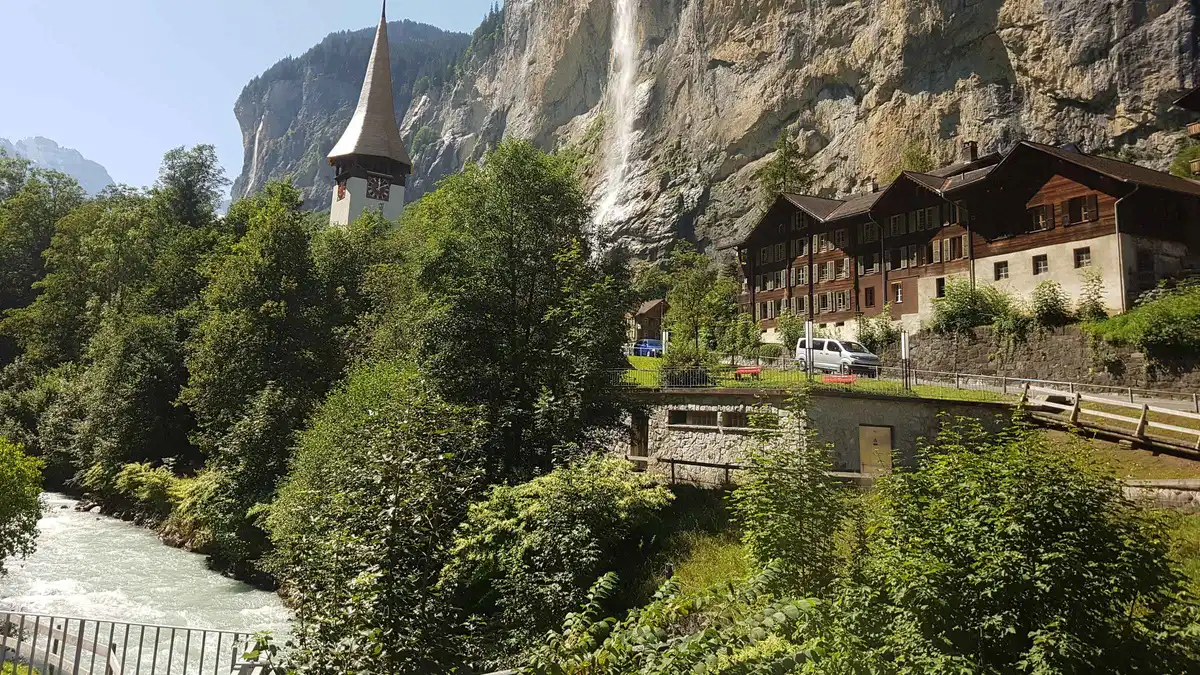 from $310.00
Lauterbrunnen-Mürren: Swiss Alps Tour from Interlaken
An hour in Lauterbrunnen village then three hours loose in car-free Mürren, all by public rail and cable car with a small group. Trümmelbach Falls sits on the route but its entry fee is paid separately at the gate if you stop there.
Check Availability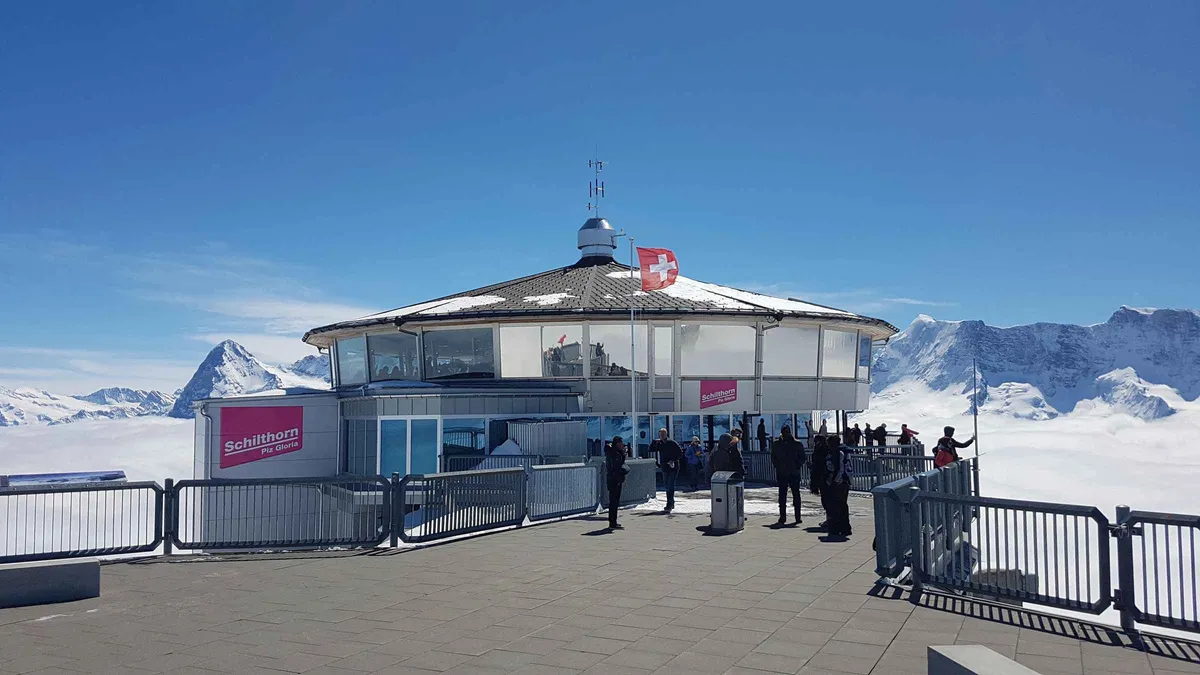 from $439.00
Swiss Skyline: Mt. Schilthorn Small Group Tour from Interlaken
The priciest Schilthorn option on this list, and the only one with a live guide through the Thrill Walk plus guaranteed cable car boarding on a busy day. A public Stechelberg-Schilthorn return ticket alone runs CHF 115, so this tour's premium buys the guide and skipped queue, not the ride itself.
Check Availability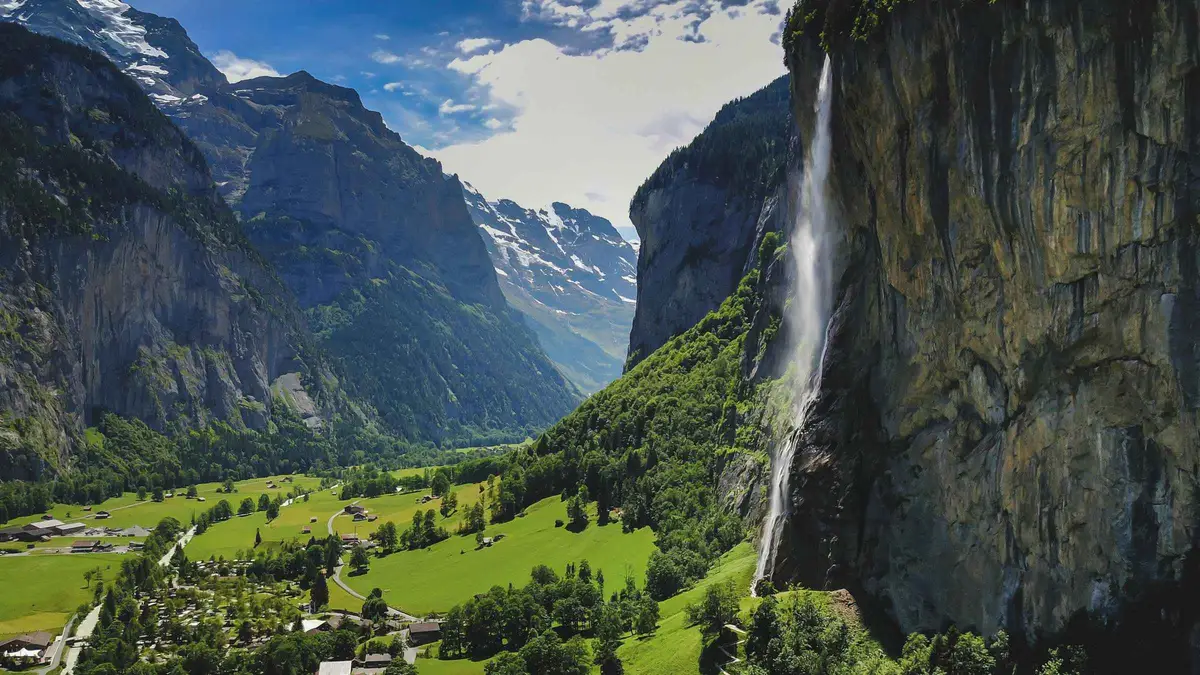 from $254.00
Interlaken: Lauterbrunnen + Trümmelbach Falls Tour
A door-to-door minibus with an English-speaking host instead of a fixed meeting point, built around an easy walk rather than a hike. The Trümmelbach Falls entry fee is not folded into the price, it is paid at the gate.
Check Availability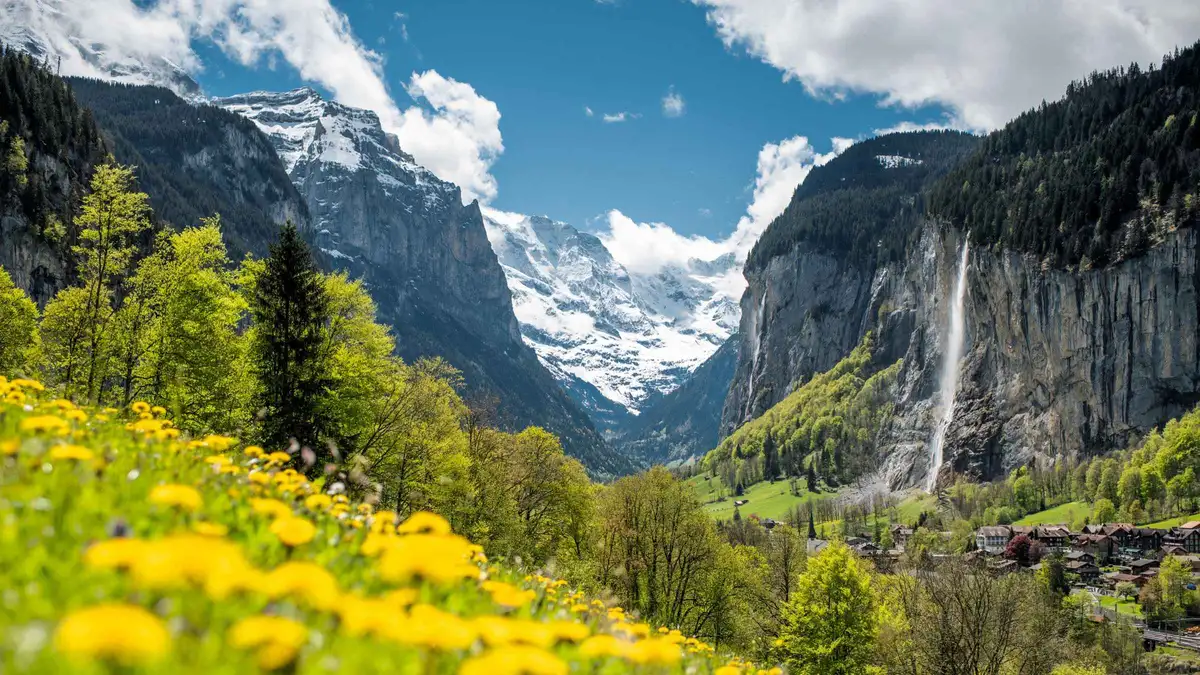 from $97.00
From Interlaken: Guided Grindelwald & Lauterbrunnen Tour
The cheapest of Best of Switzerland Tours' three coach routes on this list, because it starts already in Interlaken instead of Zurich or Lucerne. Both village stops are free time, not guided walks, so this buys the transport and the schedule, not commentary.
Check AvailabilityPrices, ratings and details are the platform's own. Dollar figures are the listed prices. The platform bills in your account's currency.
Lauterbrunnen vs Interlaken: the Questions That Decide It
Which is more beautiful, Interlaken or Lauterbrunnen?
For mountain drama, Lauterbrunnen. It sits at about 802 m inside a glacial valley with 72 waterfalls and cliffs on both sides, and Staubbach Falls drops 297 m past the village. Interlaken is attractive in a different, flatter way, with the Höhematte meadow framing views of the Jungfrau, Mönch and Eiger and two lakes at either end of town. This is a landscape question with a clear answer and a town-life question with the opposite one: Lauterbrunnen is the more dramatic setting, Interlaken is the more pleasant town to spend an evening in.
Can I stay in Lauterbrunnen and still visit Interlaken easily?
Yes. The Bernese Oberland Bahn runs direct between Lauterbrunnen and Interlaken Ost with no change in 22 minutes, with roughly 32 trains a day. There is no published fixed fare for the leg, so check the distance-based price in the SBB app.
Is Interlaken a good base for the Jungfrau Region?
It is a workable base with a trade-off. Interlaken Ost is the gateway station, with the BOB running toward Lauterbrunnen or Grindelwald and the Harderbahn funicular up Harder Kulm in 10 minutes. But every mountain day starts with a connecting train, and the Schilthorn cableway leaves from Stechelberg via Lauterbrunnen, not from Interlaken.
Which base is cheaper for reaching the Schilthorn?
The cableway ticket is the same from either town, since the only valley station is Stechelberg: the adult return is US$139.70 (CHF 115). Starting from Interlaken adds the 22-minute BOB leg to Lauterbrunnen and the connection to Stechelberg, so Lauterbrunnen saves transport time rather than ticket price.
Is Lauterbrunnen too small to use as a base for a week?
It depends on your evenings. The village is quiet with limited dining, and the municipality has only 2,301 residents across six villages. Hikers and photographers do fine for a week. Travellers who want restaurants and shops every night usually prefer Interlaken, or split the stay between the two.
Should I split my stay between Lauterbrunnen and Interlaken?
It is a reasonable compromise for trips of five nights or more. Sleep in Lauterbrunnen for the summit and waterfall days and move to Interlaken for lake days and the journey out. With a 22-minute direct train between them, moving luggage is one short ride either direction.
See Both Bases Before You Book
Three videos that show the contrast between the lake town and the valley village. The middle one follows the road through the Lauterbrunnen valley toward Grindelwald, and the last one lays out a three-day itinerary covering both bases.
Interlaken Travel Guide: 10 Experiences You Must Do
A tour of what Interlaken itself offers, from the Höhematte to the lakes and the Harder Kulm funicular.
Video: Ian and AnaLauterbrunnen to Grindelwald: the Scenic Drive Through the Valley
The road journey through the Lauterbrunnen valley, showing the waterfall country you would wake up to.
Video: The Flying Dutchman3 Day Switzerland Itinerary: Interlaken, Grindelwald and Lauterbrunnen
A worked three-day plan that uses both towns and shows how the 22-minute train ties them together.
Video: The Traveling Swiss - Louis & AlexisVideos load from YouTube only when you press play.