 Lauterbrunnen City Guide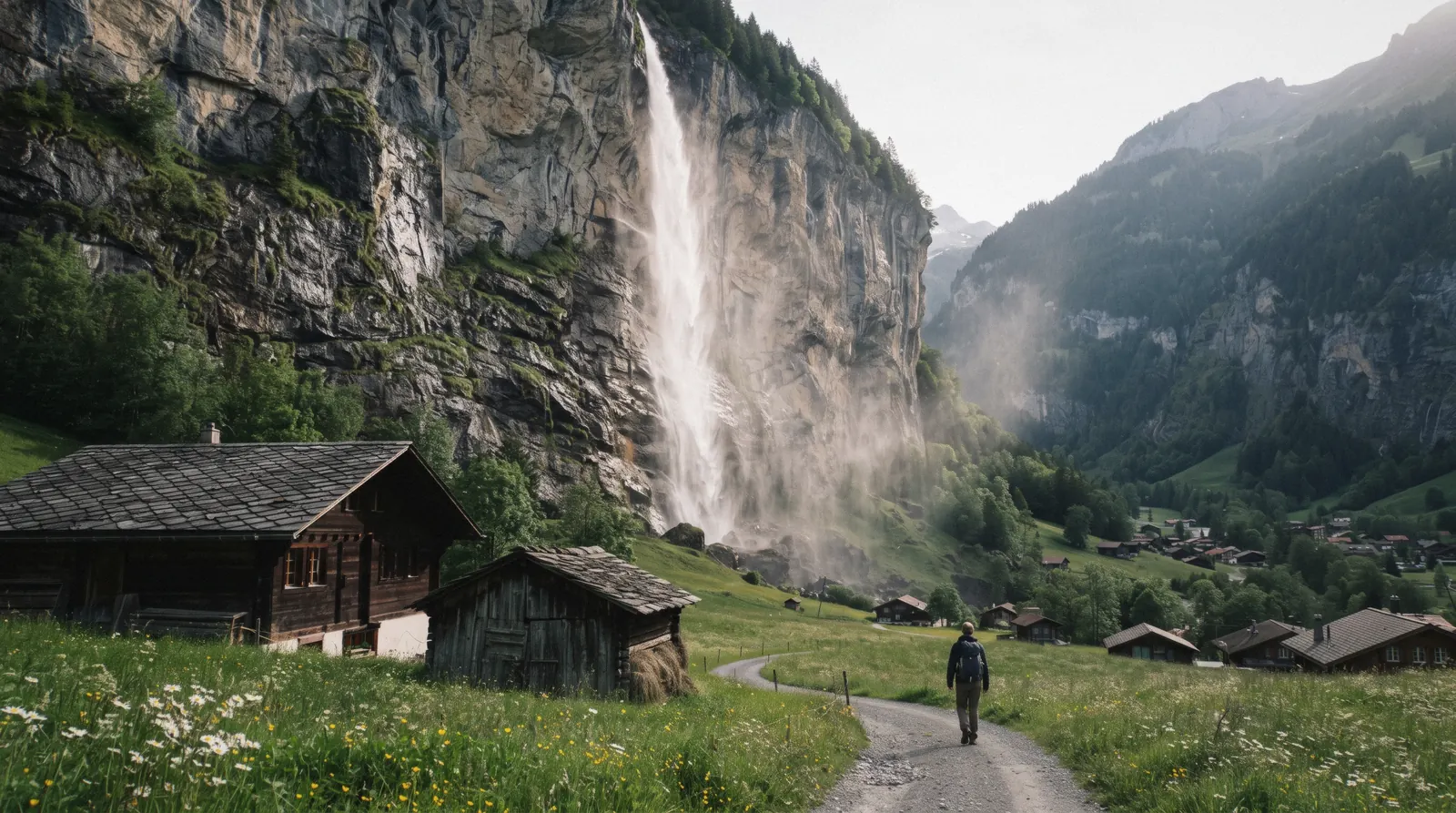
Staubbach Falls, Lauterbrunnen
Staubbach Falls is the free, 297-metre waterfall that drops directly over Lauterbrunnen village, and for most visitors it is the first sight of the valley up close. This page covers the path to its base, when the flow runs strongest, and how it compares to the paid Trümmelbach Falls further up the valley. For the wider trip, see the Lauterbrunnen Switzerland guide.
Quick answer The short version
Staubbach Falls drops 297 metres down the cliff face at Lauterbrunnen and is described by Jungfrau Region Tourism as the highest free-falling waterfall in Switzerland. A paved path leads straight from the village street to the base, with no gate, no fee and no opening hours. Flow peaks in spring and early summer with the snowmelt, and on warm summer evenings the light turns the spray gold. Goethe came here in 1779 and wrote a poem about it, which tells you how long this has been a sight worth the walk.
Key takeaways
- The walk to the base is free at all hours, see access and prices
- Spring and early summer bring the strongest flow, more in when the flow is strongest
- Compare it with the paid falls inside the mountain in Staubbach or Trümmelbach first or browse things to do in Lauterbrunnen
Key facts
Opening hours
| Viewing from the village and the path | Open–24 hours, year-round |
|---|
Closed Never closed. The fall itself can run thin or freeze in the coldest weeks of winter
Planning it
- Time needed
- Not stated by any official source. Our estimate: 15-20 minutes from the village street to the base and back
- Address
- Foot of the cliff directly above Lauterbrunnen village, on the path from the main street
Staubbach Falls costs nothing and needs no booking. The paved path from the village street is public and open around the clock. The two tours below both pass the falls on their way into the valley, so you pay them for transport, guidance and their other stops rather than for this fall itself.
There is no ticket for Staubbach Falls. The only decision is whether to walk to it on your own or see it as part of a tour.
| Option | Price | Covers | Cancel | Book |
|---|---|---|---|---|
| Walk to the base, unguidedAnyone staying in or arriving at Lauterbrunnen village, which is most visitors | Free | The paved path from the village street to the foot of the fall, open 24 hours a day, year-round | Not applicable | Official site |
| Interlaken: Lauterbrunnen + Trümmelbach Falls TourVisitors without a car who want an easy hosted day with an English-speaking host | $254.00 | Hotel pickup in Interlaken, a hosted minibus ride past Staubbach Falls, and a stop at Trümmelbach Falls with entry paid separately on site | 24 hours before the start time | Check Availability |
| Interlaken: 72 Waterfalls Valley & Lauterbrunnen E-Bike TourConfident riders who want the valley road under their own wheels | $302.00 | A guided e-bike ride from Interlaken into the valley with stops at Staubbach and Trümmelbach Falls, the Trümmelbach entry fee included | 24 hours before the start time | Check Availability |
Both tour rows are Interlaken-based trips that pass Staubbach Falls on the way to Trümmelbach Falls. Figures current in Q3 2026.
Tours That Pass This Way
Both of these leave from Interlaken and roll into the valley right past the Staubbach cliff. The difference is the bike and the ticket.
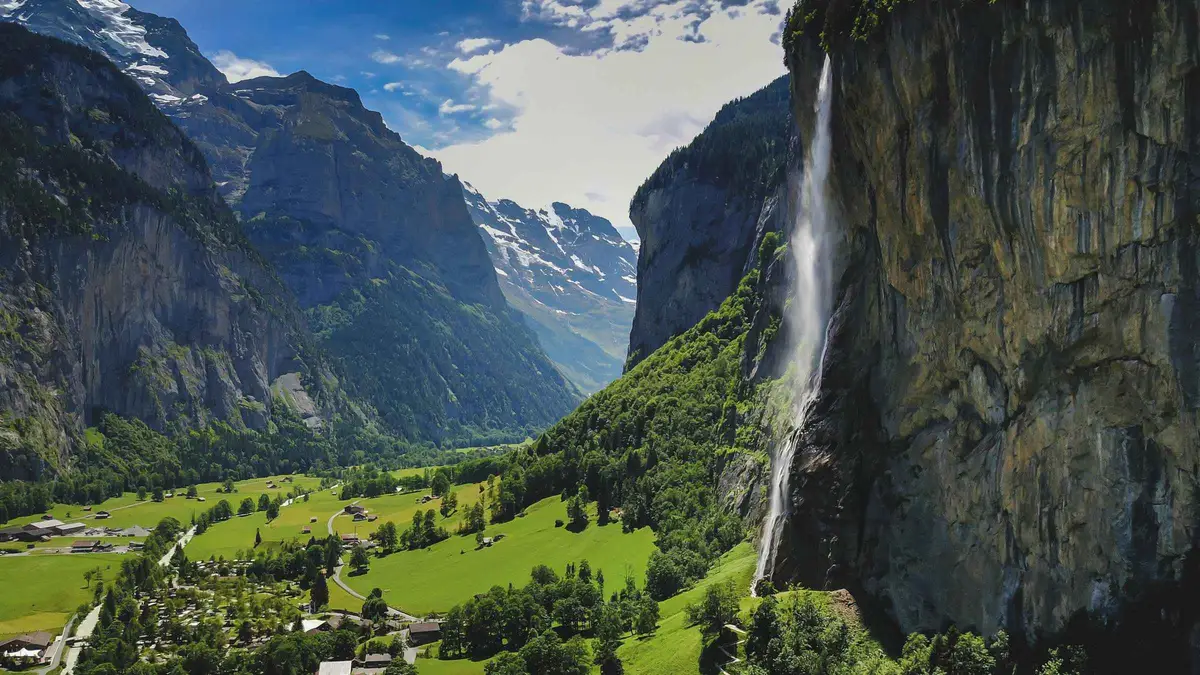 from $254.00
Interlaken: Lauterbrunnen + Trümmelbach Falls Tour
A door-to-door minibus with an English-speaking host instead of a fixed meeting point, built around an easy walk rather than a hike. The Trümmelbach Falls entry fee is not folded into the price, it is paid at the gate.
Check Availability from $302.00
Interlaken: 72 Waterfalls Valley & Lauterbrunnen E-Bike Tour
A guided e-bike loop from Interlaken along the river into the valley, with the Trümmelbach Falls entry fee already folded into the price. Riders who cannot handle a bicycle are turned away at the start, so this is not a beginner's first ride.
Check AvailabilityPrices, ratings and details are the platform's own. Dollar figures are the listed prices. The platform bills in your account's currency.
What Staubbach Falls Is
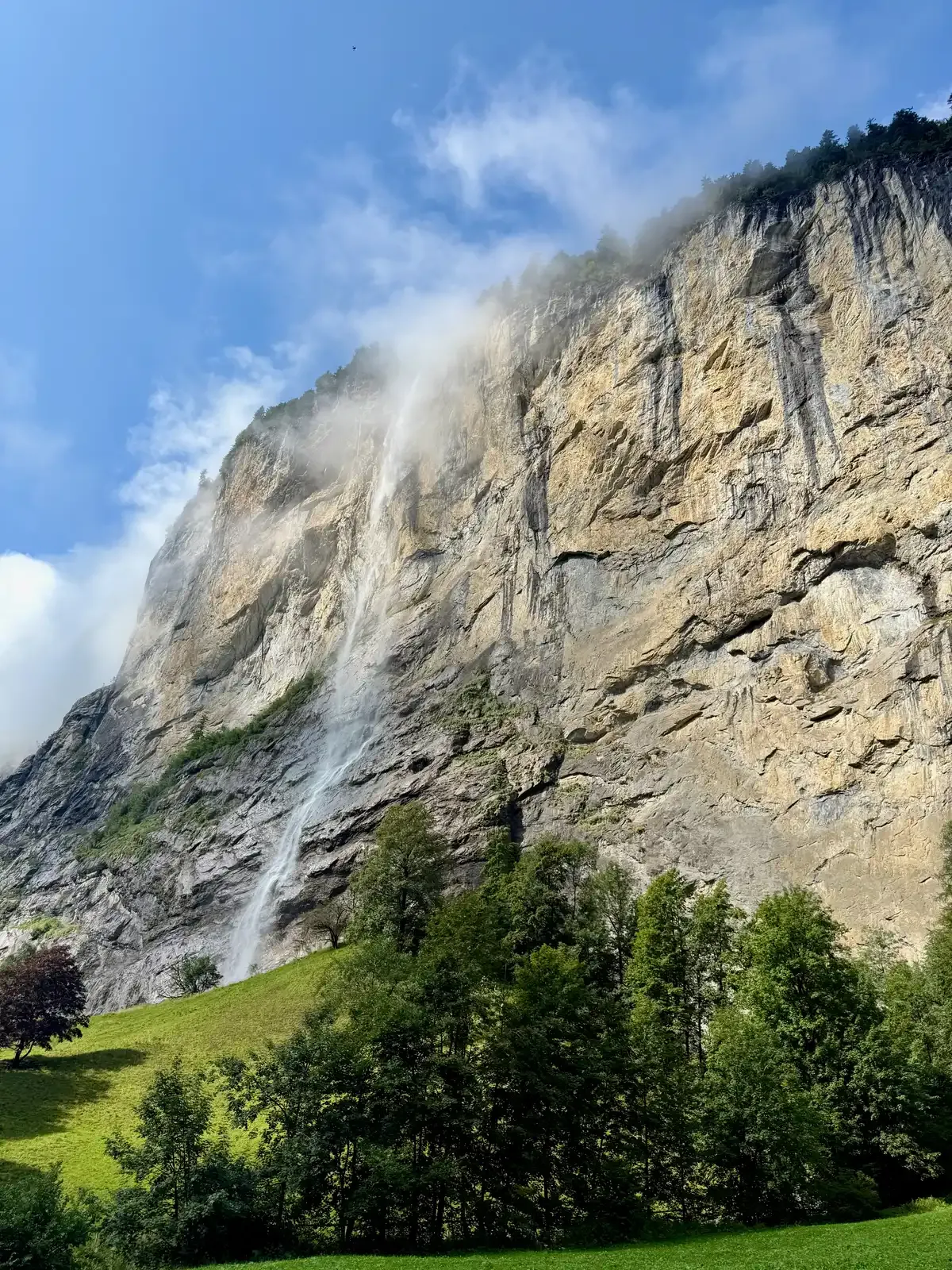
Staubbach Falls from the village. Photo: Oleg Yunakov, CC BY-SA 4.0, via Wikimedia Commons
Staubbach Falls is a single ribbon of water that leaves the cliff edge high above Lauterbrunnen village and falls 297 metres to the valley floor. Jungfrau Region Tourism's own page calls it the highest free-falling waterfall in Switzerland, which means the water does not slide down rock for most of its descent, it drops through the air. The name explains what happens next.
Staub is the German word for dust, and by the time the water has fallen that far it breaks into a drifting spray that the wind moves around the meadow below. On a gusty day you can stand a fair distance off and still feel it. The fall sits directly above the village, and the village church was built in 1487 and 1488 right below it, so the waterfall and the village have shared a skyline for more than five centuries.
The valley itself was first written down in 1240, and the water that feeds the fall is part of why it carries its name. Poets noticed early. Goethe visited in 1779 and the fall moved him to write, which says something about the effect of 297 metres of falling water on a person standing in its spray.
Sources: Jungfrau Region Tourism, Staubbachfall; Lauterbrunnen Tourism, Discover the Lauterbrunnen Valley.
The Path To The Base
From The Village Street
Finding the start of the path takes no effort at all. From the main street of Lauterbrunnen a paved path leads directly toward the cliff and up to the base of the fall. There is no gate, no turnstile and no fee, which is unusual for a natural sight of this size in Switzerland.
The path exists because the fall belongs to the village in every practical sense. It hangs over the churchyard and the houses, so the route to it is simply the route out of the village toward the rock face. No official source publishes a distance or walking time for the path.
Our own estimate is 15 to 20 minutes from the village street to the base and back, at an unhurried pace with a pause for the spray. Wear shoes you do not mind dampening, because the dust of falling water drifts across the meadow near the base. If you arrive by rail, Lauterbrunnen train station sits in the village, so the whole visit can happen between trains.
When The Flow Is Strongest
Waterfall timing here is a snow calendar, not a rain one. Flow is strongest in spring and early summer, when the winter snow high on the cliffs above the valley melts and feeds the fall. In those weeks the Staubbach is a proper column of water.
By late summer it thins, and in the coldest weeks of winter it can run to almost nothing or freeze, though the cliff face stays worth looking at all year. One effect is worth planning for if your dates allow it. On warm summer evenings the operator describes a different, golden-lit effect, as the low sun catches the spray drifting off the cliff.
That is a good reason to walk to the base after dinner rather than at midday. Note that no metered flow-rate figure is published for Staubbach, unlike some other falls in the valley where the operators measure and advertise their water volumes, so any specific litres-per-second claim you read elsewhere is not official.
Goethe, The Church And A Name Written Down In 1240
The valley itself appears in records in 1240, written as 'in claro fonte', the clear spring, in Latin. The later German name Lauterbrunnen is read either as 'lauter Brunnen', many springs, or 'lautere Bäche', clear streams. Either way, the name describes exactly what you see: a valley wall strung with falling water, of which Staubbach is the tallest and most visible.
The village grew directly beneath the fall, and in 1487 and 1488 the community built its church right below the cliff, so the pairing of church and waterfall in nearly every photograph of Lauterbrunnen is centuries old, not a modern framing. In 1779 Johann Wolfgang von Goethe visited Lauterbrunnen and stood in this spray, and the encounter produced his poem Song of the Spirits over the Waters. What these dates share is a valley that has lived with the waterfall as a neighbour rather than treated it purely as an attraction, which is still how it reads today.
Sources: Lauterbrunnen Tourism, Discover the Lauterbrunnen Valley; Wikipedia, Staubbach Falls.
Staubbach Or Trümmelbach First
You will hear both names in the same sentences, and they are different experiences rather than rivals. Staubbach is the free one, an open-air column of water above the village, reached on foot in minutes with no ticket and no hours. Trümmelbach Falls, in our separate guide, charges adults US$21.90 (CHF 18) and sits about 3 km up the valley, reached by postbus or bike.
Its water runs inside the mountain, ten glacier falls reached through tunnels and lifts, and it closes from the beginning of November to the beginning of April each year. The order we suggest depends on the season and your feet. Do Staubbach first simply because it costs nothing and takes minutes, and it sets the scale of the valley for you.
If it is between the beginning of April and the beginning of November, add Trümmelbach afterwards for the falls you walk through rather than look at. If both appeal and you would rather have the driving done for you, the minibus tour from Interlaken takes in both, and the e-bike tour includes the Trümmelbach entry in its price. For the wider picture, see our guide to Lauterbrunnen's waterfalls.
Map
The fall hangs directly over the village, so most pins you need are within a short walk.
Coordinates from Wikidata and OpenStreetMap.
Next Stop From Staubbach Falls
Once you have walked to the base and back, here is where most visitors head next.
Trümmelbach Falls
Ten glacier falls inside the mountain, about 3 km up the valley, adults US$21.90 (CHF 18), closed from the beginning of November to the beginning of April.
Lauterbrunnen train station
Your rail link to Interlaken and the rest of the Bernese Oberland, a short walk from the fall.
Lauterbrunnen waterfalls
Our overview of the falls strung along the valley walls, with the free ones and the paid ones side by side.
Staubbach Falls Questions
How much does it cost to visit Staubbach Falls?
Nothing. The fall is free to view from the village and the paved path to the base, with no ticket and no gate. If you want a guided day that passes it, the Interlaken minibus tour is listed at $254.00, but the fall itself never charges.
How long is the walk to the base of the falls?
No official figure is published. Our estimate is 15 to 20 minutes from the village street to the base and back. The path starts from Lauterbrunnen's main street, and the train station is close by, so you can fit the walk around a train connection.
When is the water flow strongest?
In spring and early summer, when the snowmelt feeds the fall. By late summer it thins and in the coldest weeks of winter it can run thin or freeze. On warm summer evenings the spray catches a golden light that the operator itself describes. See our section on the path and the seasons.
Is Staubbach Falls open all year?
Yes, the viewing path is open 24 hours a day, year-round, and never closes. The water volume changes with the seasons, but the cliff and the village view are always there. This is a contrast with Trümmelbach Falls, which shuts from the beginning of November to the beginning of April.
Can I see Staubbach Falls on a day trip from Interlaken?
Yes, and you have options. The train from Interlaken Ost reaches Lauterbrunnen, from where the fall is a short walk, and our one day in Lauterbrunnen plan builds the day around it. If you prefer everything arranged, the e-bike tour from Interlaken rides into the valley past the fall.
Why is it called Staubbach?
Staub is the German word for dust. The water falls 297 metres, and by the time it lands it has broken into a fine spray that drifts like dust in the wind, which is the name. The same naming logic gave the valley its name, recorded in 1240, from its many springs and clear streams.
Where Staubbach Falls Fits In A Day
Because it is free, open all hours and sits on top of the village, Staubbach is the easiest thing to slot into any Lauterbrunnen day. Arrive by train, walk to the base first, and you have seen the valley's signature sight before anything else has opened. From there, most people head up the valley to Trümmelbach Falls, on foot, by postbus or by bike, and our one day in Lauterbrunnen itinerary strings those stops together in order.
If you are continuing to Stechelberg for the Schilthorn cableway or the walk up to Mürren, note that the fall makes a fine evening stop on the way back through the village, especially on a warm summer evening when the spray lights up gold. And if the whole logistics of trains and entries feel like too much arithmetic, let a tour do the driving. The minibus tour from Interlaken and the e-bike tour both roll past this cliff and handle the valley for you. Either way, budget your 15 to 20 minutes at the base, keep a layer handy for the spray, and let the highest free-falling waterfall in the country cost you nothing.
Staubbach Falls On Film
Three videos of the fall itself, from ground level and from behind the spray.
The Staubbachfalls at Lauterbrunnen. Waterfall Review.
A ground-level look at the fall and the path to its base.
Video: Brad Ball TravelsVisit of Staubbach falls in Lauterbrunnen, Switzerland's highest freefalling waterfall - 4K
A 4K walk to the fall from the village street.
Video: Sam Euro Walks[4K] Lauterbrunnen Staubbach Falls SWITZERLAND Hike The Best View From Behind A Waterfall
A closer hike toward the spray, showing the scale from underneath.
Video: Travelheart23Prices, hours and terms are set by the venue or operator and confirmed at checkout.
We may earn a commission if you book through one of our links, at no extra cost to you. Full affiliate disclosure